
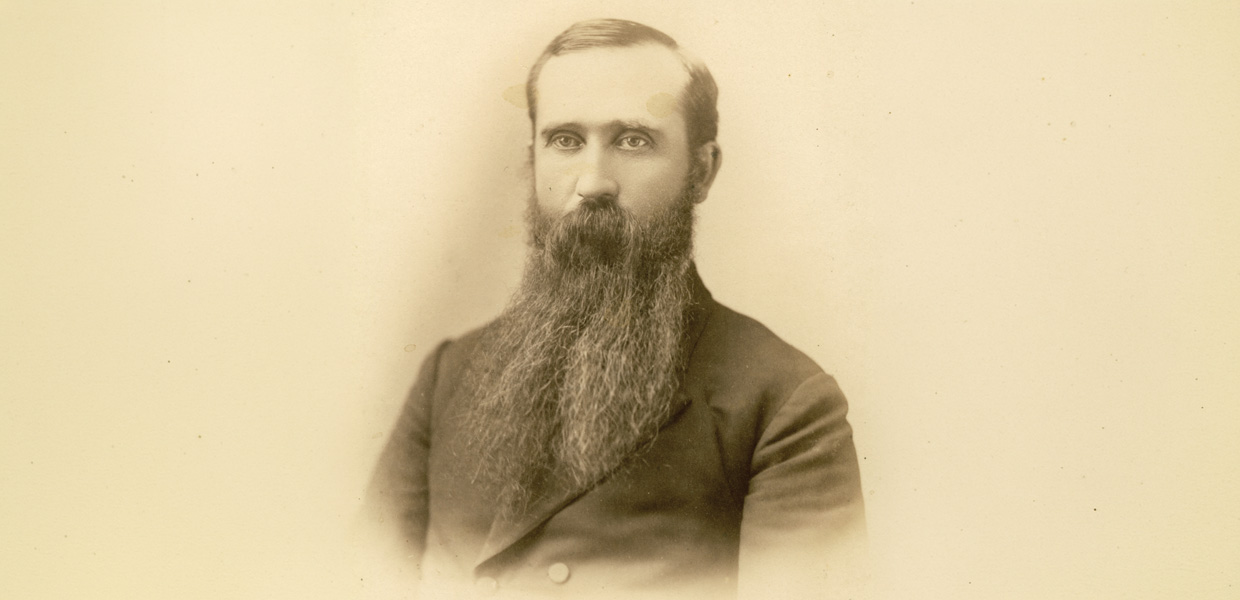
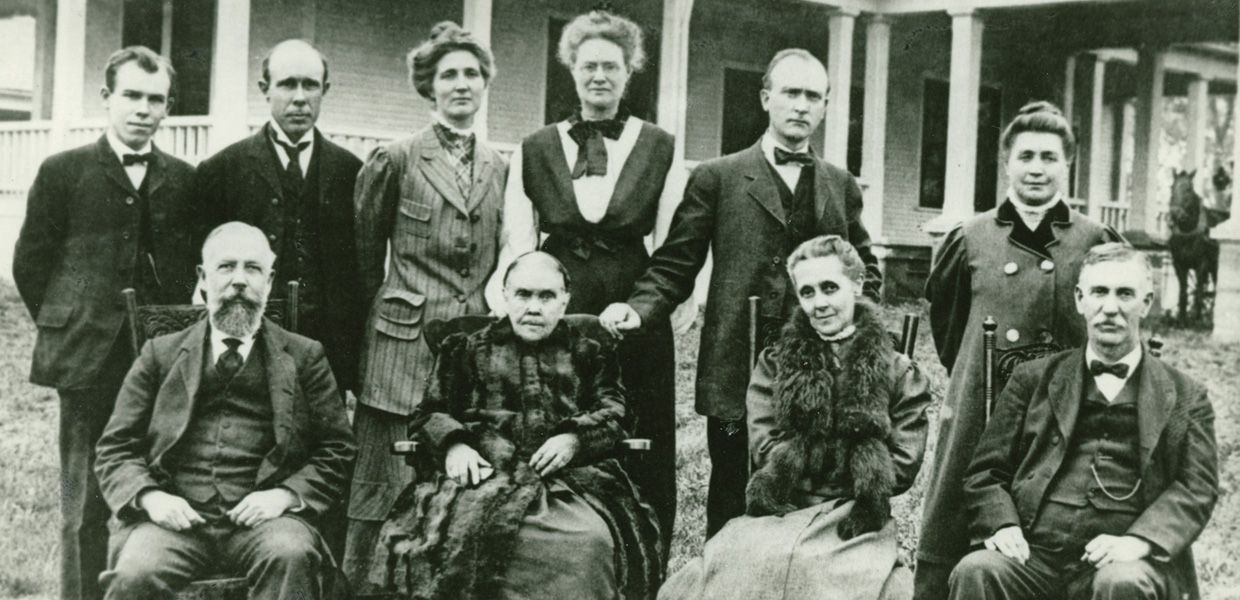


It was 125 years ago that the Southern Union of Seventh-day Adventists was organized. During the 1901 General Conference Session in Battle Creek, Michigan, Elder Robert M. Kilgore, representing the delegation from General District #2, presented a motion proposing the formation of a Union. The Union was organized and voted on April 9, 1901, and began operation a few weeks later, on May 1, with Elder Kilgore serving as president.
The territory included “three state conferences, Tennessee River, Florida, and Cumberland. The rest of the territory was an unorganized mission field. In the entire territory there were 62 churches, having a membership of 1,900, which, with 680 isolated Sabbath-keepers, made a total of 2,580 reported believers. At the time of organization, there were 24 ministers, 11 licentiates, and 30 licensed missionaries, making a total of 65 laborers. There were also 65 canvassers, 20 medical missionaries and nurses, and 15 other workers laboring as self-supporting missionaries. The tithe received for the year ending Dec. 31, 1900, was $13,214.80.” (General Conference Bulletin, 1903)
Eight months later, the Union held its first session. It began on Friday, January 3, 1902, and continued through January 12. Among the church leaders in attendance were Willie C. White and his mother, Ellen G. White. She had visited Nashville a month before the Union was organized, and was now present for the first session. She would attend the first three sessions of the Southern Union. That Sabbath, she spoke for 35 minutes. (Letter 3, 1902, 5 Bio 1430)
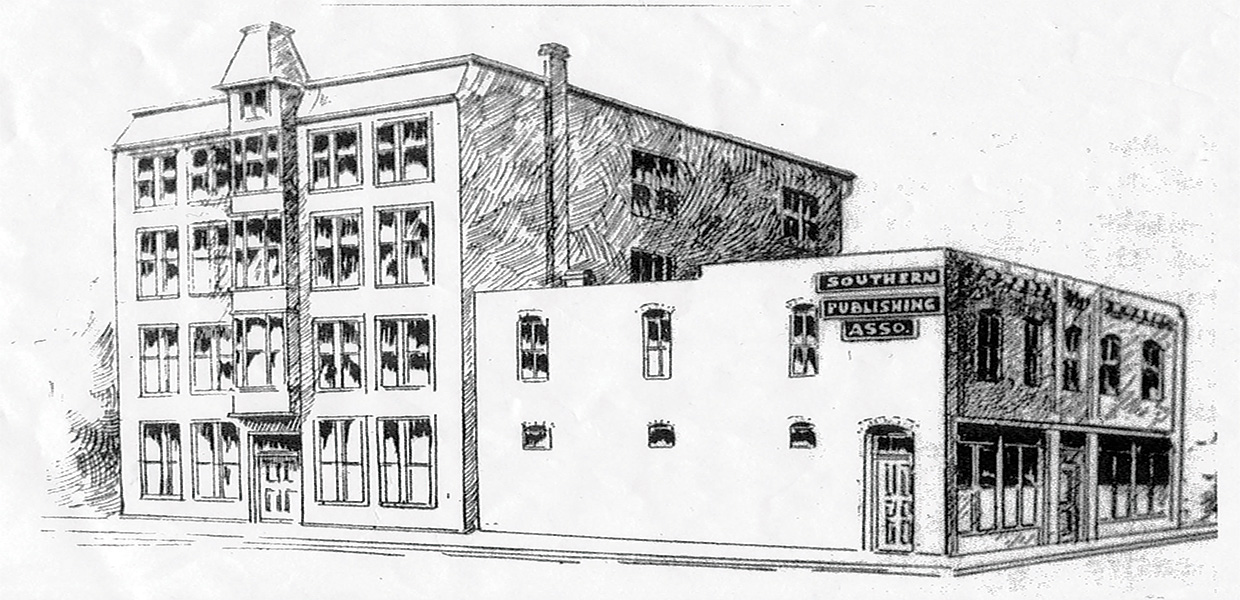
During his president’s report, Elder Kilgore reported on the progress the Union had made over the past eight months since its organization. The Herald Branch office in Atlanta was moved to Nashville and merged with the Southern Publishing Association; the Southern Missionary Society, formerly managed by James Edson White, was brought under the Southern Union; and the Union headquarters relocated from Graysville to Nashville. Additionally, new conferences were organized in the Carolinas (September), Georgia-Cumberland (August), Alabama, and Mississippi.
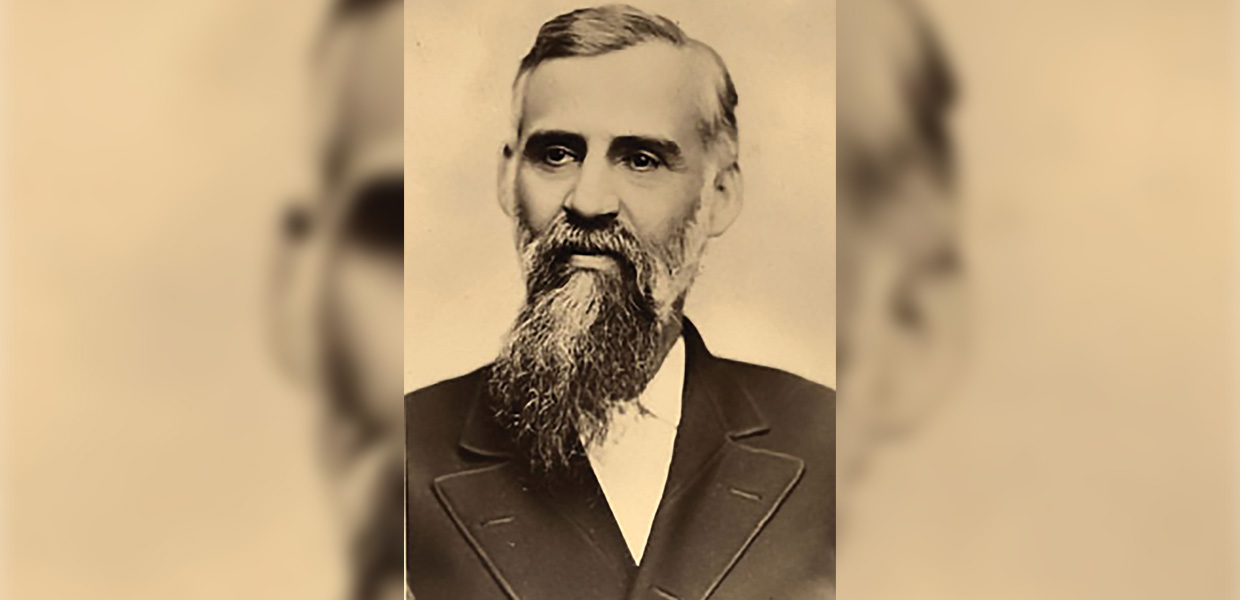
At this session, Elder George I. Butler was elected president, but kept Robert Kilgore as vice president. Kilgore had started his work as a tent master for Elder Butler and Elder M. E. Cornell. Now, Kilgore’s mentor and friend assumed leadership of the Union with him at his side. They would work together until Butler’s retirement.
When Butler accepted the role, he was living in Bowling Green, Florida; had recently buried his wife, Lentha; and was elected president of the Florida Conference in December. Now, Butler would serve as president of the Florida Conference and the Southern Union both for the next three years. He led the Union for six years, from 1902 to 1908.
Butler was uniquely prepared to lead the fledgling Union, which was the weakest among the newly formed unions, during a time of serious challenges. Finances were limited, the membership was small, and the educational and medical institutions required strong guidance. Additionally, he had to navigate the complex racial realities of the South. Butler brought decades of administrative experience, having served twice as General Conference president, and having organized numerous institutions while president of the General Conference, but the task demanded more than human wisdom or vision, so he looked to the Lord and Ellen G. White.
The Union started as the weakest union in the North American Division, but by 1908, it had become a viable partner in ministry and was divided into two unions: the Southern and Southeastern unions. The two unions merged in 1932, and continued to grow. By 2003, it had the largest membership in the North American Division and is now one of the strongest unions in the World Church. (Southern Tidings, June 2003, p. 2, 6, 7)
What were the keys to the growth? And what does it mean for us as we celebrate our 125th anniversary?
Butler Sought and Followed Ellen G. White’s Counsel
Ellen White showed special interest in the Southern Union. In a letter she wrote, “To my brethren bearing responsibilities in the Southern Union Conference … I have not slept since two o’clock. I have an intense interest in all that concerns the welfare of the Southern work. When a difficult field is presented before me as a field that must be worked, I understand that I must make this field my special burden until, before the earnest, continuous efforts put forth, the difficulties disappear, and the work is established.” (17 Lt Ms, Lt 119, 1902, par. 1)
A few months after Butler was elected, he and W. O. Palmer, treasurer of the Southern Publishing Association, traveled across the country to Elmshaven in St. Helena, California, to visit Ellen White. They were seeking counsel for some of the difficult issues in the Union. Arthur White tells the story:
“When they presented the situation of the Union and requested advice, they were surprised when she told them that over the past few months, she had written quite a few pages related to their questions.”
When they read over what she had written, they discovered the answers to their questions. One important question pertained to how to raise money. “As they looked over these materials, they found that the Lord had instructed her to appeal to the churches throughout America to assist in establishing the work in the Southern States on a firm basis. The needs, which were great, were to be made known to church members throughout the land, and an opportunity was to be given to them to help. The brethren found in this counsel that which brought courage to their hearts, and after several interviews in which the work was reviewed and counsel given, they felt that their mission had been accomplished.” (5BIO 169.5)
Everyone saw that God’s Word is true: “Before they call, I will answer; while they are yet speaking, I will hear,” Isaiah 65:24.
Throughout the early years of the Southern Union, each president sought counsel from Ellen White or her son, Willie C. White. While Butler was president, he and Ellen White frequently corresponded about the work in the South and other areas of the Church. Her counsel is still sound and relevant for leaders, pastors, and church members today.
They followed her counsel, and the situation began to improve. But at the 1903 session, Butler reported that the Union was still “considerably in debt … we need advice and a decision on how to pay the workers,” General Conference Bulletin 1903, p. 130. Arthur G. Daniells, General Conference president, observed, “The Southern field … is in a condition of things that calls for assistance from our more favored conferences … $300,000 has been applied to the work in what is now the Southern Union Conference.” (ibid., March 31, 1903, p. 20)
Butler Led the Union to a Higher Level of Spirituality
Before the Union could experience God’s full blessing, Elder Butler, as did Hezekiah, needed to address the need to raise the spirituality of the workers, the local conference, and the Union. Ellen White had written to him about the need to raise the standard.
“I see distinctly that our ministering brethren need to reach a higher standard. They are not to listen to the evil things said of their brethren in any place until they first talk with those spoken against, to learn whether the reports are just, or most cruelly unjust. But there are those who do not follow this course. They believe the disparaging things said of their fellow workers and tell them from place to place all over the field. Thus impressions that are false in every respect are left on minds. If this is the message that these brethren are burdened with, and this the work they do as they travel from place to place, I think that they would better engage in hard manual labor until they are converted and their spirituality strengthened — until they are charged with the Holy Spirit. Back-biting is a terrible wrong.” (17LtMs, Lt 176, 1902, par. 5)
“I have an earnest desire, my dear Brother Butler, that you shall just now stand in your lot and place in Nashville. The Lord is setting things in order there, and you are needed. May the Lord help you and strengthen you, is my prayer. I pray constantly for you. Be of good courage in the Lord. Let nothing separate you from the work at Nashville. Be as true as steel to principle. The enemy will try to discourage and annoy you, but remember that God is upholding you. He will be the light of your countenance and your God.” (17LtMs, Lt 176, 1902, par. 6)
“It seems so cruel for ministers and people to be accusing and finding fault, trying to destroy the work that has been done under the most discouraging circumstances.” (17LtMs, Lt 176, 1902, par. 8)
In another letter, she wrote, “A worker cannot gain success while he hurries through his prayers to God and rushes away to look after something that he fears may be neglected or forgotten. He takes time to give only a few hurried thoughts to God, that is all. He does not give himself time to think, to pray, to wait upon the Lord for a renewal of spiritual and physical strength. He soon becomes jaded. He does not feel the uplifting, inspiring influence of God’s Spirit. He is not quickened by fresh life. His jaded frame and tired brain are not soothed by personal contact with Christ.” (17LtMs, Lt 83, 1902, par. 27)
She made similar appeals for Elder Butler to change some of his angular and forceful personality traits, which he heeded.
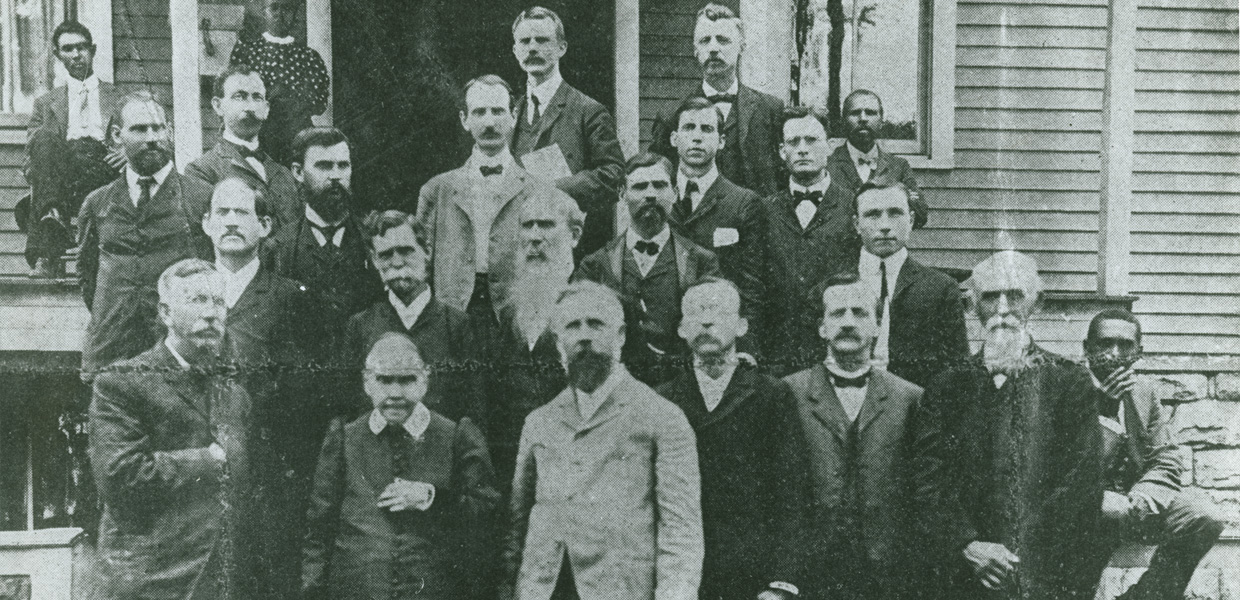
The 1904 Session was the first biennial session of the Union. It was held from January 8 to 28 in Nashville. At this session, Butler began leading the Union toward alignment with God. The stated purpose was to “place the work in the South on a better basis.” Agenda items indicate that most of the first week was used to raise the workers’ spirituality to a higher level with daily 6 a.m. consecration services, mid-morning preaching by Elder Stephen N. Haskell in the sanctuary, and a Bible study led by his wife, Mary Haskell. Ellen White had sent five or six letters that spoke to the spirituality of the workers and their families. These were read publicly and published in the Southern Watchman. After renewing their commitment to God, several days were spent dealing with the institutions and departments. Finally, the officers were elected on the last day of the session.
“At the close of our Nashville council,” The Southern Watchman reported, “This blessed meeting is now in the past …. We firmly believe the purpose for which the meeting was called, ‘the placing of the work in the South on a better basis,’ was greatly accelerated if not fully accomplished. A great amount of excellent instruction was given. Our meetings were spiritual. A precious spirit of unity and love prevailed. The articles sent by Sister White to be read were most excellent, spiritual, illuminating, and just what we all needed; and they were most highly appreciated.
“We shall be greatly disappointed if this meeting does not serve as a point of new departure, a new era in the history of the work in the South. I expect to see more earnest work characterize our efforts henceforth, more souls embracing the truth, greater financial success, greater unity, a far greater dissemination of our literature, a fuller consecration to the work to which the Lord has called us. We shall see what we shall see. (The Southern Watchman, February 2, 1904, p. 72)
Aggressive Evangelism
In the decades after the Seventh-day Adventist Church was organized in 1863, the small denomination experienced rapid growth. However, by 1900, its growth had slowed to a level that Ellen White found alarming. The Church’s attention and efforts in North America were concentrated on “institutional preoccupations” rather than evangelism. Ellen White started urging Church leaders to focus on platform evangelism in the major cities. Though resistant at first, gradually, Elder Daniells and the other leaders guided the Church to focus on evangelizing the large cities on the East Coast, especially Washington, D.C., which had become the new headquarters of the General Conference. (Howard B. Weeks, Adventist Evangelism in the Twentieth Century, p. 14-26)
Meanwhile, Butler and Kilgore, who were both former tent evangelists, never lost their zeal for evangelism. Coming out of the 1904 Union Session with a working force that had consecrated itself to a higher standard of spirituality, the Union began to see increased growth.
At the 1905 General Conference Session, Butler reported, “In the two years since the last GC Session, 19 new churches have been added, bringing the total number of churches to 99. There was a gain of 529 members, giving the Union 2,353 members, and there was a good tithe increase. The tithe for 1904 was $22,034.97, which was a gain of $464.67 over the previous two-year period …. The average per capita tithe was about $8, which was the average for churches in the North.” (General Conference Bulletin, May 25, 1905, p. 25)
Evangelism and training for evangelism continued after Butler retired. In 1911, the first Ministerial Institute was held in Knoxville, Tennessee, at the Knoxville Presbyterian Church. W. W. Prescott, G. B. Thompson, and A. G. Daniells trained pastors and Bible workers during the day, and held public evangelistic meetings in the evening. Daniells declared it would “mark a new era in the history of the work in the South.” (Howard B. Weeks, Adventist Evangelism in the Twentieth Century, p. 49)
In 1912, the venerable Robert Kilgore, then 73 years old, was pastor of the Nashville Church, but conducted what would be his final tent meeting in Dickson, Tennessee. A church of 12 was organized from this meeting, a few months before his death.
In addition to holding official positions as president of the Union (1901), vice-president of the Union (1902-1908), and president of Georgia Cumberland Conference (1903-1906), he always “carried on evangelistic work in tents, meeting-houses, and halls. A short time before his death, he stated that he did not remember ever holding a course of meetings when there was not someone who embraced the truth and began the observance of the Sabbath of the Lord,” Advent Review and Sabbath Herald, August 1, 1912, p. 14.
Ever since, evangelism has remained the watchword in the Southern Union:
1937 – The first Field School of Evangelism was held in Greensboro, North Carolina, in September to teach pastors the evangelism system used by the most effective evangelists. J. L. Shuler, the Union evangelist and president of the Carolina Conference, directed the School. He subsequently became general field secretary of the Union.
1954 – Eric C. Ward and E. Earl Cleveland held major evangelistic meetings in Wilmington, North Carolina, and Montgomery, Alabama, respectively. More than 500 were baptized in each city.
1959 – Operation Dixie, a Union-wide evangelistic thrust involving all Southern Union departments and pastors, was organized by Don Rees, Union president.
1961 – Don Rees reports a record 3,622 baptisms. This was the best since 1954, when 3,635 were baptized. (Southern Tidings, January 17, 1962. p. 16)
2009 – A Year of Evangelism. Under the leadership of Gordon Retzer, Union president; Dennis Ross, Union evangelist, and his wife, Jacqueline Ross; and the presidents of every conference, the pastors and laymen of the Southern Union baptized 9,618.
The Union’s current president, Ron C. Smith, D.Min., Ph.D., conducts evangelistic meetings every year while carrying his presidential portfolio, just as the first president of the Union did. In addition, almost every conference is showing consistent growth.
Collaborative Planning and Ministry
Another practice that began in the Southern Union during Elder Butler’s leadership, was collaborative planning and ministry. During the 1908 Session, and possibly during the 1906 Session (we do not have minutes for the 1906 Session), a Committee on Plans, which included conference and Union leaders, met to plan the work for the various departments and institutions. They developed proposals that were voted on by the delegates and published. This practice continues in the Southern Union Administrative Council, where all administrators and departmental directors of the Union and local conferences meet to plan the work of the following year and beyond. This practice, which is more than a century old, continues to strengthen the Southern Union. “There is wisdom in the multitude of counsel.”
1908 Biennial Session
At the 1908 session, Butler did something else that Ellen White encouraged. As he had done at every session since 1902, he asked Elder Kilgore to review God’s leading with the Southern Union. After tracing God’s hand in the Union from 1871 to that time, Kilgore closed his remarks by reading Psalm 40:
You have multiplied, O LORD my God,
Your wondrous deeds and Your thoughts toward us; none can compare with You!
I will proclaim and tell of them,
yet they are more than can be told.
I have told the glad news of deliverance
in the great congregation;
behold, I have not restrained my lips,
as You know, O LORD.
I have not hidden Your deliverance within my heart;
I have spoken of Your faithfulness and Your salvation;
I have not concealed Your steadfast love and Your faithfulness
from the great congregation.
But may all who seek You
rejoice and be glad in You;
may those who love Your salvation
say continually, “Great is the LORD!”
Psalm 40:5, 9, 10, 16.
After Kilgore’s reflections and praise, Arthur G. Daniells, General Conference president, approvingly commented on the progress of the Union. “The gain in membership in this field has been ten percent per year, and in tithe, it has been fifty percent in the last five years. This increase of tithe shows a steady growth in the South. I believe that the work can be placed upon a self-supporting basis …” Arthur G. Daniells, Report of Progress, February 25, 1908. The Union had become strong enough that it was deemed advisable to divide the Union into the Southeastern and Southern unions.
George I. Butler retired at the 1908 session, having seen God’s promise fulfilled: “Believe His prophets, so shall you prosper.”
Growing in Faith and Love
In this article, we have examined numerical and financial growth, as they are necessary metrics that the body of Christ has used to measure growth and strength from the day of Pentecost to this day.
However, at one of the first pastors’ meetings I attended more than 50 years ago, all of the pastors were reporting on the usual numbers: baptisms, tithes, and magazine goals. When it was time for William J. Cleveland, a former conference president, successful evangelist, and pastor of Birmingham Ephesus Church, to give his report, he stood up and reported, “We have met all of our goals. Those are important, but what I want to report is that our congregation is growing in faith and love. That is what matters in Heaven!”
Friends, as we celebrate this anniversary, the nation is polarized, and the love of many is waxing cold. Sadly, it is affecting us as a body. As we celebrate, let us commit to fulfilling the Gospel commission and being faithful stewards. But above all, let us pray for a higher level of personal and corporate spirituality, and ask the Holy Spirit to help us grow in faith and love (1 Thessalonians 1:2-3).
(Deviations from current Southern Tidings style honor the historical styles of our Union’s roots.)
Southern Union | May 2026


Comments are closed.