
Christina Norris
Christina Norris
Christina Norris
Christina Norris
Christina Norris
Shortly after the official founding of the Seventh-day Adventist Church, some of its members faced persecution for breaking blue laws, laws which restricted certain activities on Sundays and other specially designated days.
In several states, according to an article in an 1886 The Review and Herald, Saturday Sabbath keepers were imprisoned or fined for working on Sunday. Many early Adventists worked on Sunday out of necessity and following the “six days you shall labor” wording of Exodus 20:9. Some of these persecutions happened within what is now the Southern Union territory, including the well-documented cases of Robert M. King, W.A. McCutchen, and E.C. Keck.
King, a farmer in Tennessee with crops like corn and potatoes, was arrested and fined on more than one occasion for working in his fields on Sunday. According to Adventist Encyclopedia, King was targeted because of his faith. Around that same time, Ellen White wrote in The Review and Herald on the threat to religious liberty. She encouraged members to oppose what would “restrict liberty of conscience.” As a result, Adventists began forming groups that advocated for religious freedom and the separation of church and state. One such group aided King by making appeals, eventually getting his case on the Supreme Court docket, though he died before his case could be heard.
In Gainesville, Georgia, McCutchen and Keck were charged with breaking a blue law. The two were arrested for building benches on Sunday for a soon-to-open church school. In support of the two men, a group of Adventists attended the trial, according to an 1894 issue of The Gainesville Eagle. Eventually, the case was dismissed.
These past examples of religious freedom infringement are often forgotten. However, it is important for Adventists to remember their religious liberty heritage as the Church continues to advocate for those whose religious freedom is violated.
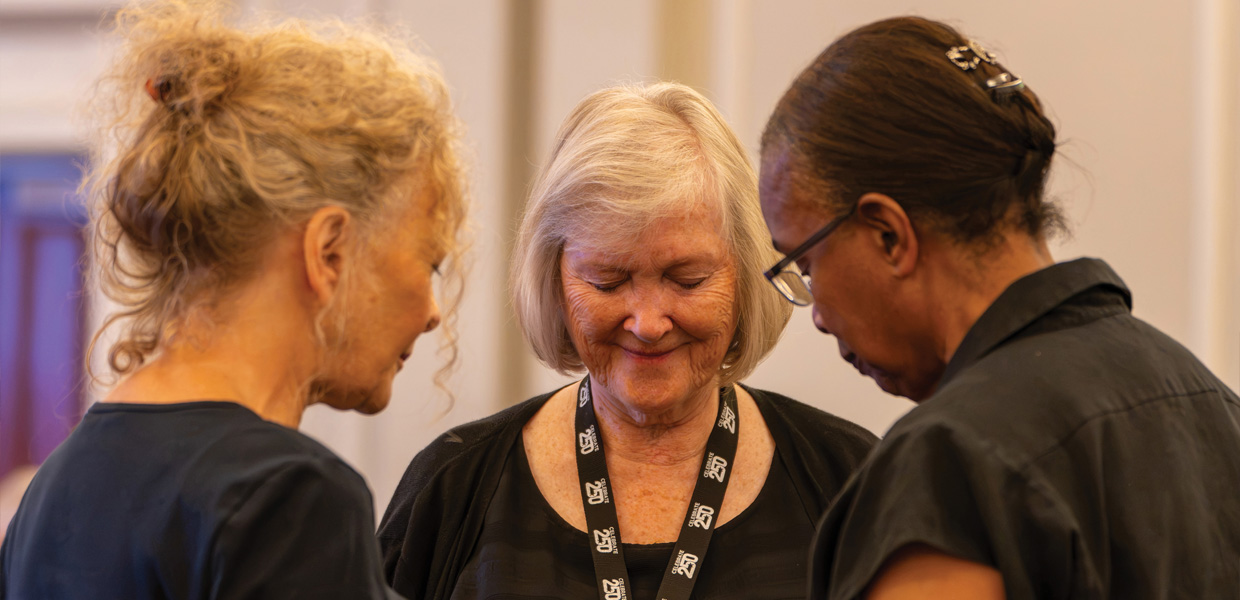
In celebration of the country’s 250th anniversary, and of the religious freedoms this country bestows, the Southern Union Department of Public Affairs and Religious Liberty hosted two events in historic Williamsburg, Virginia.
Adventist Attorneys Retreat
The Southern Society of Adventist Attorneys (SSAA) comprises Adventist attorneys and legal professionals in the Southern Union. The group meets annually for a retreat. During this year’s retreat, the group gathered for continuing education, meals, worship, and recreation.
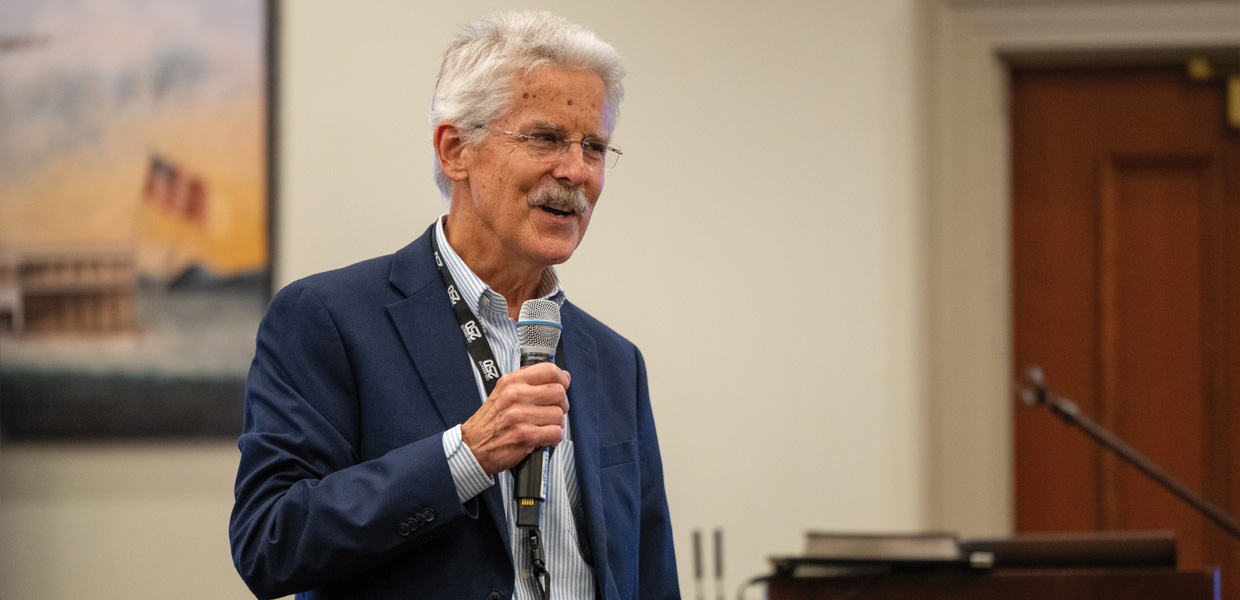
Dwight Nelson, pastor, was the keynote speaker for the event. He gave three presentations on the “American Apocalypse.” Nelson used Revelation 13 prophecy to discuss America and religious liberty. Nelson warned against using the government to establish Christian values, and warned of the dangers of Christian nationalism. He emphasized that part of the Church’s mission, with help from the Holy Spirit, is to win people to Christ through truth, love, and relationships. While Nelson acknowledged that those in the legal field may be unable to share the Gospel with clients, he encouraged them to live lives of love and share their faith with colleagues.
William Cochran, former SSAA president and general counsel for Florida Conference, reflected on the importance of the annual gathering: “This event provides an important opportunity for our Adventist lawyers in the Southern Union to network with other member practitioners, share the special challenges and lessons from our work, and worship together …. Our Adventist attorneys have unique perspectives on the practice of law, and the messages brought by speakers like Pastor Dwight Nelson help us all to refine and sharpen those perspectives.”
Celebrating America’s 250th
The Southern Union Public Affairs and Religious Liberty Department generally hosts meetings every three years. With the United States’ significant 250th anniversary, Amireh Al-Haddad, director of the department, wanted to hold a special celebration to commemorate the milestone.
For this significant event, the department wanted to host the gathering in a place with important American history and ties to several early American religious liberty advocates. During scheduled free time, attendees could visit the historic area of Colonial Williamsburg. Attendees were able to explore historically accurate buildings, interact with historical interpreters, view period-
accurate demonstrations, and see artifacts from the time.
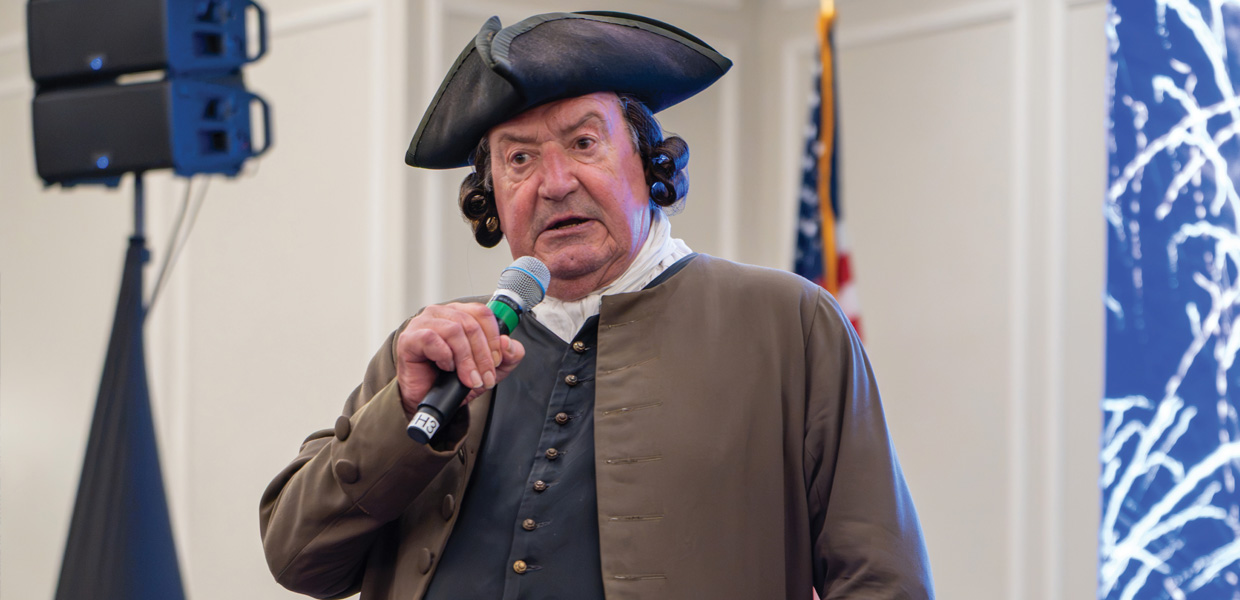
The event, which spanned four days, had several guest speakers, including three historical interpreters. These interpreters, also known as Nation Builders, are actors who study a historical figure in depth and accurately portray that person’s character through monologues and interactions. Interpreters of Patrick Henry,
Gowan Pamphlet, and Thomas Jefferson all visited the event and spoke about their perspectives on religious liberty.
Each morning, the event began with worship. Attendees sang and prayed together before listening to the morning devotional by Joseph Reeves, assistant director of Sabbath School and personal ministries for the General Conference.
“At the heart of the religious liberty debate is a question about who God is and how we understand His character. Religious liberty battles in America today are being shaped by how preachers portray God,” said Reeves.
Reeves used biblical examples to show how Christians today, regardless of their political affiliation, can unite through the love of Christ. He also used biblical and prophetic examples to address the way Christians should advocate for religious liberty.
Bettina Krause, editor of Liberty magazine, presented on Adventists’ long history of defending religious liberty. Krause urged attendees to remember past persecutions in America and see how far religious protections have come, even as new challenges to religious liberty arise.
Other guest speakers included American historian Randall Balmer, professor of law Steven Green, and author Brian Kaylor.
These speakers presented their research on the history of the nation’s founding while addressing pervasive myths about America being founded as a Christian nation. The speakers included several examples to support their findings.
One such example is that most founding fathers, like Benjamin Franklin, were not Christian but deists. (Deism is the belief that God created the world but is no longer involved in it.) Even founding fathers who were “Christian” do not meet the definition of conventional Christianity today. Many of these founding fathers did not believe in Christian ideals like the resurrection and the virgin birth, to name a couple. While most individuals during the founding period identified as Christian, only about 10-15% were members of churches, according to Law and Liberty.
The presenters spoke on the religious atmosphere during America’s founding years. They shared that while many countries during this period had a state religion, an official government-supported religion, the colonies collectively did not. In fact, one presenter asserted that, at the time, America was one of the most religiously diverse countries. However, individuals in nine of the 13 colonies in 1776 were still required to make religious oaths to hold office, sometimes oaths specific to denomination. But by 1791, the number of colonies requiring these oaths had dropped from nine to three after the implementation of America’s new constitution.
While drafting documents for this new nation, the founding fathers intentionally wrote in a secular tone. The Declaration of Independence does not include mention of any deity, except the phrase “in the year of our Lord.” Similarly, the United States was one of the first modern nations to exclude God or any deity from its Constitution.
Religion was only introduced into founding documents through the First Amendment, which addresses the freedom of religion, speech, press, assembly, and petition. This amendment does not specifically support Christianity, but instead protects the free exercise of religion while prohibiting the government from establishing or favoring a religion.
While many today believe the inclusion of religious wording was included in several areas of government near the inception of the country, history shows that much of it was added more recently. The motto “In God We Trust” officially became America’s motto in the 1950s. Alterations made to include this phrasing on paper currency and adding the phrase “under God” to the Pledge of Allegiance were also added in the 1950s. The presenters explained that this was primarily a response to communist ideals which were considered “godless.” The presenters suggested that Christians today are misguided in pointing to these phrases as evidence that America was founded specifically as a Christian nation.
Overall, the speakers reiterated the secular nature of how America was founded, and the benefit this provides religious freedom. They also reviewed how our nation, before independence, shows a different story of religious persecution and the infringement on the rights of conscience for those who did not join the colony religion. These stories held great sway over our founders’ decisions to keep church and state separate and not have the state’s interference in establishment of religion.
The event also featured two movie nights that showcased documentaries on religious liberty. The first documentary examined the history of religious liberty in America and the founding fathers’ faiths. The second documentary showed the rise of Christian nationalism in America and its impact on democracy and Christianity.
The concluding event was a birthday party for America. The occasion included patriotic songs sung by Karla Rivera, American history games with prizes for attendees, and an American-themed birthday cake.
In reflection of the event, Al-Haddad said, “This event was an important occasion to be informed and reminded of the danger to religious liberty, and America’s role in Revelation 13 prophecy. Together we learned relevant history of our Church and country, affirming the ever-present need for the separation between them. We are grateful to be part of a wonderful country that provides religious freedom. This event allowed us to celebrate our country’s founding and our rights which grant us the liberty we so highly value.”
This event is just one effort in the Church’s continued commitment to advocating for and educating others about religious freedom. Religious liberty has been an important value of the Church throughout its history, shaped in part by the religious persecution experienced by early Adventists.
As the Church continues this advocacy today, it is critical to uphold the founding fathers’ intention to separate church and state while remembering the Church’s own history. In The Great Controversy, Ellen White wrote about the danger of joining church and state. Her writing still provides guidance for the Church’s view of religious liberty today: “The union of the church with the state, be the degree never so slight, while it may appear to bring the world nearer to the church, does in reality but bring the Church nearer to the world.”
Southern Union | October 2026


Comments are closed.